

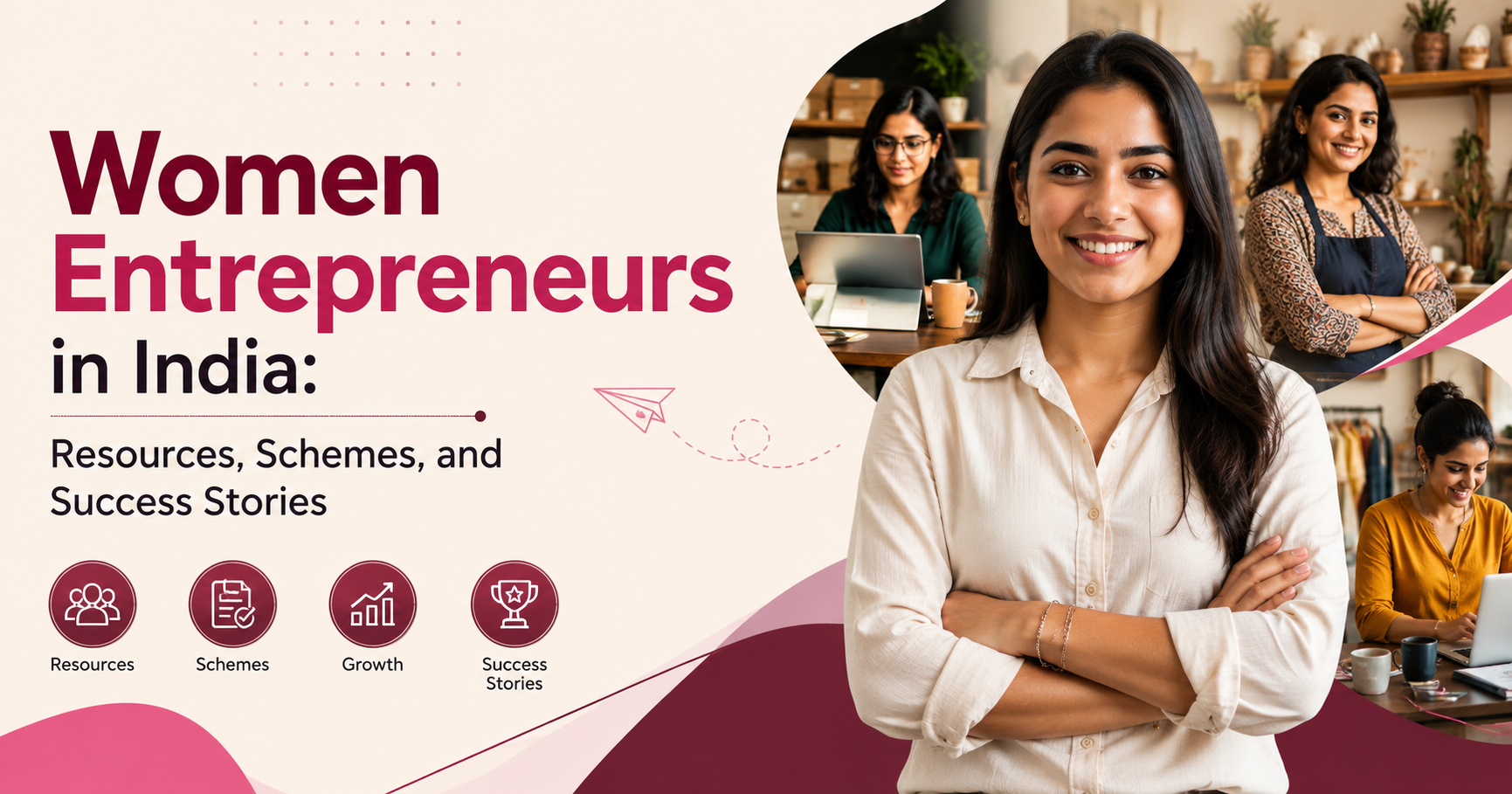
Women Entrepreneurs in India: Resources, Schemes, and Success Stories
Table of Contents
-
Email Marketing Basics for First-Time Founders
- Why Email Marketing Matters More Than Ever
- Understanding Email Marketing
- Why First-Time Founders Should Invest in Email Marketing Early
- The Benefits of Email Marketing for Startup Growth
- Building Your First Email List the Right Way
- Choosing the Right Email Marketing Platform
- Creating Your First Email Marketing Campaign
- Writing Email Subject Lines That Increase Open Rates
- Creating Email Content That Builds Relationships
- Personalization Makes Every Email More Relevant
- Understanding Audience Segmentation
- Email Automation: Saving Time While Growing Your Business
- Designing Emails That Look Professional
- Why Mobile Optimization Cannot Be Ignored
- Measuring the Success of Your Email Marketing
- Common Email Marketing Mistakes First-Time Founders Should Avoid
- Best Practices for Long-Term Email Marketing Success
- Conclusion
Introduction
India’s entrepreneurial ecosystem has undergone a tremendous evolution in the last 10 years. Women are not just limited to traditional career paths anymore, they are running businesses that create employment and add to the national economy, build startups, run manufacturing units and launch their own online brand and of course run tech companies.
This change is due to the improved access to education and digital technology, government support and shifts in society. Whether it was in metro cities or small towns, women are seizing business opportunities, addressing real-life problems and proving that entrepreneurship is male and female.
But, there are still problems with launching and creating a business. For many budding small business owners, the lack of funding, mentoring, networking and entrepreneurial knowledge remains a challenge.
Fortunately, the Indian start-up ecosystem has come a long way. For women entrepreneurs today there are government schemes, financial assistance, incubation centres, training programmes and networks available which have been designed specifically to help them succeed.
This guide discusses the development of women entrepreneurship in India, the problems faced by many women entrepreneurs and how business ideas can be transformed to a successful business.
The Rise of Women Entrepreneurship in India
The startup ecosystem is all the more inclusive in India as women have an active role in every industry ranging from Technology to Healthcare, Education to Fashion, Food Processing to E-commerce, Agriculture to Professional Services.
Unlike the previous generations, the newer generations are taking a high advantage of digital platforms to commence their businesses at a lower investment level. Thanks to social media, online marketplaces, “easy” marketing tools and low-cost payment options, businesses are now able to connect with customers nationwide with ease.
This change was hastened by the pandemic. A number of women established businesses out of their abilities, such as coaching online, creating handmade products businesses, cloud kitchens and online consulting businesses. Many made their living out of these additional sources and they became full-fledged businesses.
With their continued expansion, these companies are not only contributing to the creation of jobs but also fostering the communities and supporting India’s aspiration to become a global hub for innovations.
The Digital Economy Has Opened New Doors
The easily accessible digital technology has been one of the major causes of women entrepreneurs’ success. It’s no longer necessary for entrepreneurs to have a storefront to create a successful brand.
For instance, a gal who is proficient at baking could offer products utilizing Instagram and neighborhood conveyance systems. You can make a living as a graphic designer, working from home for international clients. In the same way, smaller town artisans can sell their handmade products via e-commerce platforms and get customers all throughout India.
Followers of the business path are increasingly becoming women, and technology has made it far easier for women to turn their talents into a successful business venture.
Small Businesses Are Driving Big Change
Not all businesses are financed to a great sum and have a lot of employees. There are many successful businesses that began with minimal funds and have developed over time with ongoing hard work and customer satisfaction.
From a small clothing store to a social enterprise, a family-run farm, or a tech company, women business owners are proving that a sustainable business usually starts by having a creative and dedicated business owner who can address everyday problems in a creative and caring way.
They inspire others by their success to think that entrepreneurship is a good and lucrative career option for women.
Why More Women Are Choosing Entrepreneurship Today
Over the years, there has been a change in the reasons behind what made people start a business. Freedom from financial dependence is important but flexibility, innovation, personal fulfillment and the need to make a difference are also key driving forces for women entrepreneurs today.
Entrepreneurship is a preferred career path for many women, due to the greater control and freedom to pursue ideas that are of interest. They are not going the traditional route of employment, but are pursuing their own businesses that match their skills, interests and goals for the future.
Financial Independence and Career Growth
Running a business can be an avenue to earn a living and create a future financial stability. Entrepreneurship provides women with an opportunity to build assets, grow professionally and make a direct impact on the economy, in addition to relying on employment opportunities.
A software expert, for example, can start an online agency that will work for customers around the world and a fashion designer can set up an online fashion brand that will become a global brand over time.
Flexibility in Managing Work and Personal Responsibilities
Another aspect of entrepreneurship which traditional jobs may not offer is flexibility. A flexible work schedule allows business owners to often create their schedule as they see fit to meet their business needs and personal obligations, allowing for a better balance of family time and business goals.
Being self-employed involves hard work and long hours but there are many benefits of being able to choose when, where, how and with whom you work.

Increased Access to Business Resources
Today the aspiring entrepreneur has a myriad of learning opportunities at his disposal compared to 10 years ago. There are more ways than ever to learn about business, and they are all available online through courses, startup communities, mentorship programs, networking events, as well as government initiatives.
They assist the new business owner who is trying to figure out business planning, marketing, money, legalities and customer acquisition, and eliminate many of the unknowns.
Challenges Women Entrepreneurs Still Face
Although women entrepreneurs have made tremendous strides, there are still numerous challenges they face when establishing and expanding their businesses. It is important to identify these difficulties and take steps to overcome them in order to implement effective solutions and utilize available support systems.
Limited Access to Funding
One of the most frequent problems of new ventures is finding the capital they need. It can be challenging for many women entrepreneurs to secure external capital and for these women they have to depend on their savings or on the help of their family members in the initial phase.
Insufficient working capital can be a hindrance in expanding business operations, technology investments, hiring quality staff or promoting effective marketing campaigns.
Fortunately, there are a number of government-sponsored funding schemes for women-led businesses, startup funds and financial institutions that support the funding of women-led businesses.
Building Professional Networks
Strong professional networks often play an important role in business growth. Connections with mentors, investors, industry experts, and fellow entrepreneurs can lead to valuable collaborations and learning opportunities.
However, many first-time business owners have limited access to such networks, particularly in smaller cities and rural areas. Participating in startup events, business associations, incubator programs, and online communities can help bridge this gap and open doors to new opportunities.
Managing Multiple Responsibilities
Running a business requires constant decision-making, financial management, customer engagement, and strategic planning. Many women entrepreneurs also balance family responsibilities alongside their professional commitments.
This dual responsibility can make time management challenging, especially during the early stages of a business. Developing efficient systems, delegating tasks where possible, and leveraging digital tools can help improve productivity and reduce operational stress.
Keeping Up with a Changing Business Environment
Markets, consumer preferences, and technology continue to evolve rapidly. Entrepreneurs who invest in continuous learning are better positioned to adapt to these changes and remain competitive.
Regularly upgrading skills in areas such as digital marketing, financial management, artificial intelligence, e-commerce, and customer experience enables businesses to identify new opportunities and respond effectively to changing market demands.
By embracing innovation and making use of the growing support ecosystem available in India, women entrepreneurs can overcome many of these challenges and build resilient, future-ready businesses.
Government Schemes Supporting Women Entrepreneurs in India
The Government of India has introduced several initiatives to encourage more women to enter the world of entrepreneurship. These schemes aim to improve access to finance, training, mentorship, and business development support, making it easier for aspiring entrepreneurs to turn their ideas into successful ventures.
Whether you’re planning to launch a home-based business, a manufacturing unit, or a technology startup, these programs can provide valuable assistance at different stages of your entrepreneurial journey.
Stand-Up India Scheme
The Stand-Up India Scheme was introduced to promote entrepreneurship among women and individuals from underrepresented communities. Under this initiative, eligible entrepreneurs can access bank loans to establish greenfield enterprises in sectors such as manufacturing, services, trading, and agriculture-related activities.
Beyond financial assistance, the scheme also provides guidance during the loan application process, helping first-time entrepreneurs navigate the complexities of starting a business.
For example, a woman planning to open a food processing unit can use the scheme to secure funding for machinery, infrastructure, and initial operational expenses.

Pradhan Mantri Mudra Yojana (PMMY)
For entrepreneurs looking to start or expand small businesses, the Pradhan Mantri Mudra Yojana offers financial support through collateral-free loans under different categories based on business requirements.
Many women-owned businesses, including boutiques, beauty salons, tailoring units, retail stores, and small manufacturing enterprises, have benefited from this scheme by accessing working capital without significant financial barriers.
Mahila Coir Yojana
Women interested in the coir industry can benefit from the Mahila Coir Yojana, which promotes self-employment through skill development and financial support. The program provides training in coir processing and manufacturing while encouraging women to establish their own enterprises in rural areas.
This initiative has created livelihood opportunities for many women by combining traditional craftsmanship with modern business practices.
Udyam Registration for MSMEs
Although Udyam Registration is not exclusively for women, it provides significant advantages for women-owned micro, small, and medium enterprises. Registered businesses gain easier access to government tenders, credit facilities, subsidies, and various support programs designed to strengthen the MSME sector.
Completing Udyam Registration at an early stage can also improve business credibility when approaching banks and financial institutions.
Funding Opportunities for Women-Owned Businesses
Access to funding is one of the biggest factors influencing business growth. Fortunately, today’s entrepreneurs have more financing options than ever before, ranging from government-backed loans to private investment and startup funding.
Understanding these options allows business owners to choose financing that aligns with their growth plans.
Bank Loans Designed for Women Entrepreneurs
Several public and private sector banks offer loan products tailored specifically for women-led businesses. These financial products often provide competitive interest rates, flexible repayment options, and support for both new and existing enterprises.
A retail entrepreneur, for instance, may use such funding to renovate a storefront, purchase inventory, or expand into online sales channels.
Startup Investors and Venture Capital
Women-led startups operating in sectors such as technology, healthcare, education, sustainability, and fintech are increasingly attracting attention from angel investors and venture capital firms.
Investors generally look beyond innovative ideas—they also evaluate the founder’s vision, business model, market potential, and long-term scalability. Entrepreneurs with well-prepared business plans and a clear growth strategy are more likely to secure investment.
Crowdfunding Platforms
Crowdfunding has become an effective alternative for entrepreneurs introducing innovative products or community-driven initiatives. Instead of relying solely on traditional financing, business owners can raise smaller contributions from a large number of supporters through online platforms.
Besides generating capital, successful crowdfunding campaigns also help validate business ideas and build an early customer base.
Startup Incubators and Business Support Programs
Building a successful business often requires more than funding. Guidance from experienced mentors, networking opportunities, and access to industry expertise can significantly improve a startup’s chances of long-term success.
This is where startup incubators and accelerator programs play a valuable role.
Business Incubation Centres
Incubators support early-stage startups by offering office infrastructure, mentoring, legal guidance, technical assistance, and networking opportunities. Many universities, government organizations, and private institutions now operate incubation centres specifically designed to nurture innovative startups.
For example, a woman developing an educational technology platform can receive mentorship on product development, customer acquisition, fundraising, and business strategy through an incubator program.

Startup India Initiative
The Startup India initiative has strengthened India’s entrepreneurial ecosystem by connecting startups with learning resources, recognition programs, funding support, and networking opportunities.
Women-led startups can benefit from workshops, innovation challenges, mentorship sessions, and exposure to investors, helping them scale their businesses more effectively.
Industry Networking Events
Attending startup conferences, business expos, and entrepreneurship forums enables women entrepreneurs to meet investors, mentors, potential customers, and fellow founders.
These interactions often lead to valuable collaborations, strategic partnerships, and new business opportunities that may not emerge through traditional marketing efforts alone.
Skill Development and Training Resources
Entrepreneurship requires continuous learning. As markets evolve and customer expectations change, business owners who regularly upgrade their skills are better equipped to remain competitive.
Fortunately, numerous organizations now offer training programs covering both foundational business knowledge and advanced entrepreneurial skills.
Entrepreneurship Development Programs
Many educational institutions, government agencies, and industry organizations conduct Entrepreneurship Development Programs (EDPs) that help aspiring business owners understand business planning, financial management, legal compliance, operations, and marketing.
These programs are particularly valuable for first-time entrepreneurs who may have limited business experience.
Digital Learning Platforms
Online learning has made entrepreneurship education more accessible than ever. Entrepreneurs can develop skills in digital marketing, e-commerce, branding, financial planning, artificial intelligence, customer relationship management, and business analytics without leaving their homes.
For instance, a home-based handmade products business can learn social media advertising and search engine optimization to expand its customer reach beyond local markets.
Organizations and Communities That Support Women Entrepreneurs
Building a business becomes easier when entrepreneurs are surrounded by a supportive ecosystem. Across India, several organizations actively encourage women-led enterprises through mentorship, networking, leadership development, and business education.
These communities create opportunities for founders to exchange ideas, learn from experienced entrepreneurs, and gain practical insights into overcoming business challenges.
Many business associations also organize workshops, networking sessions, leadership summits, and startup competitions where women entrepreneurs can showcase their ideas and connect with industry experts.
For example, a founder launching a sustainable fashion brand may join an entrepreneurial community to receive guidance on branding, funding strategies, supplier networks, and scaling operations. Such interactions often accelerate business growth while reducing the feeling of navigating entrepreneurship alone.
Making the Most of Available Resources
Having access to schemes and support programs is only the first step. The real impact comes from using these opportunities strategically.
Before applying for funding or joining a support program, entrepreneurs should prepare a clear business plan, maintain accurate financial records, and define realistic short-term and long-term goals. Demonstrating clarity of vision and a strong understanding of the market significantly improves the chances of receiving financial assistance or mentorship.
It is equally important to stay informed about new government initiatives, training opportunities, and industry trends. Many successful entrepreneurs continuously invest in learning, attend networking events, and seek advice from experienced mentors to strengthen their businesses over time.
For example, a woman running a home-based bakery may initially benefit from a small business loan to purchase equipment. As the business grows, she can participate in an incubation program to refine her business strategy, explore online sales channels, and prepare for future expansion.
By combining financial support with continuous learning and strong professional networks, women entrepreneurs can build resilient businesses that are well-positioned for sustainable growth.
Inspiring Success Stories of Women Entrepreneurs in India
Every successful entrepreneur begins with an idea, but it is perseverance, adaptability, and determination that transform that idea into a thriving business. India is home to many women who have built remarkable companies while overcoming financial, social, and professional challenges. Their journeys continue to inspire aspiring entrepreneurs across the country.
Falguni Nayar – Building a Beauty Empire
After spending nearly two decades in investment banking, Falguni Nayar took a bold step by launching Nykaa at the age of 50. What started as an online beauty platform gradually evolved into one of India’s leading beauty and lifestyle brands.
Her journey demonstrates that entrepreneurship has no age limit. With a strong understanding of customer needs, a clear business vision, and consistent innovation, she built a company trusted by millions of consumers.
Kiran Mazumdar-Shaw – Leading Innovation in Biotechnology
Kiran Mazumdar-Shaw founded Biocon with limited resources at a time when biotechnology was still an emerging industry in India. Despite facing skepticism and funding challenges, she remained committed to her vision and eventually built one of the country’s most respected biotechnology companies.
Her story highlights the importance of resilience, continuous learning, and long-term thinking in building a successful business.
Ghazal Alagh – Turning a Personal Need into a Business
Ghazal Alagh co-founded Mamaearth after struggling to find safe and toxin-free products for her child. Instead of accepting the lack of suitable options, she transformed the problem into a business opportunity.
Today, the brand serves millions of customers and has become a leading name in India’s personal care industry. Her journey reminds entrepreneurs that many successful businesses begin by solving everyday problems.
Lessons Every Aspiring Woman Entrepreneur Can Learn
While every entrepreneurial journey is unique, successful founders often share common habits and principles. These lessons can help aspiring entrepreneurs build stronger businesses and navigate challenges with confidence.
First, start with a problem worth solving rather than focusing only on the product. Businesses that address genuine customer needs are more likely to achieve long-term success.
Second, continue learning even after launching your business. Markets, technology, and customer expectations evolve rapidly, making continuous skill development essential.
Third, build meaningful relationships with mentors, industry professionals, and fellow entrepreneurs. A strong professional network often opens doors to partnerships, funding opportunities, and valuable business advice.
Finally, don’t wait for perfect conditions before taking the first step. Many successful businesses started small and expanded gradually through consistent improvement and customer trust.
Tips for Women Planning to Start a Business
Starting a business can seem overwhelming, but careful planning makes the journey more manageable. Before launching your venture, identify your target audience, research your competitors, estimate your financial requirements, and create a practical business plan.
Take advantage of available government schemes, business training programs, and mentorship opportunities. Register your business, maintain proper financial records from the beginning, and invest in building a strong online presence to reach more customers.
Most importantly, remain patient. Business growth rarely happens overnight. Consistency, adaptability, and a willingness to learn from setbacks are often the qualities that separate successful entrepreneurs from the rest.
The Future of Women Entrepreneurship in India
The future looks increasingly promising for women entrepreneurs in India. Rapid digital adoption, expanding access to financial services, supportive government policies, and a growing startup ecosystem are creating new opportunities across industries.
From technology and healthcare to sustainable businesses, education, manufacturing, and creative industries, women are contributing innovative ideas that strengthen the economy and generate employment.
As more organizations invest in mentorship, funding, and skill development, the barriers that once discouraged aspiring entrepreneurs continue to diminish. The coming years are expected to witness even greater participation of women in building scalable businesses and driving inclusive economic growth.
Conclusion
Women entrepreneurs are playing an increasingly important role in shaping India’s business landscape. With access to government schemes, funding opportunities, startup incubators, mentorship programs, and digital tools, starting and growing a business has become more achievable than ever before.
While challenges such as funding, networking, and balancing responsibilities still exist, the support ecosystem available today offers practical solutions to help women succeed. By combining determination with continuous learning and strategic planning, aspiring entrepreneurs can transform innovative ideas into sustainable businesses.
Every successful business starts with a single step. With the right resources, guidance, and confidence, women across India have the opportunity to build enterprises that create employment, inspire communities, and contribute to the nation’s economic growth.

Empower your entrepreneurial dreams! Explore the best resources, government schemes, and inspiring success stories to build your business with confidence. Start today!
Faq’s
What are the best government schemes for women entrepreneurs in India?
Popular schemes include Stand-Up India, Pradhan Mantri Mudra Yojana, and various MSME support programs.
Can women get business loans without collateral?
Yes, several government-backed and bank loan schemes offer collateral-free financing for eligible businesses.
How can women entrepreneurs find funding?
Funding options include bank loans, government schemes, angel investors, venture capital, and crowdfunding platforms.
Is MSME registration beneficial for women-owned businesses?
Yes, it provides access to government benefits, credit support, subsidies, and business development opportunities.
What skills are important for women entrepreneurs?
Financial management, digital marketing, leadership, communication, and business planning are essential skills.